Monday, January 30, 2017

A Stranger’s Viewpoint

Joao Pedro Principe, a Portuguese traveller, visits Sylhet


The day I boarded my flight to Bangladesh, my expectations weren’t too high. However, this country turned out to be absolutely mesmerizing and breathtaking! Last month I set out for Srimongol with a couple of Bangladeshi friends. After completing the overwhelming challenge of perforating the Titan Dhaka Traffic, we found ourselves flying over the famous N2 highway, or at least flying is how it felt.

The entire path is ornamented with beautiful spring flowers and vegetation, small abandoned temples in the midst of rivers and rice fields, and acquitted cattle aimlessly roaming through the heart of the road. All of this absolutely made the risky highway trip more than worth it.

You don’t want to sleep and miss out on the scenic beauty of Srimongol. The air was a refreshing change since we left Dhaka. We began by exploring the village. The view of the tea gardens left us speechless to say the least! Everything about this area is fascinating; from the goats grazing in the greeneries to the image of the very neat CNGs coming through the sandy paths born within the tea estates.

We stayed at one of the bungalows called The Hermitage. It was an incredible experience. The nature, the refreshing natural pool, the lush greenery with perfectly inserted swings, slides and surrounded by nothing but silence. In the first morning, the bungalow had a delightful arrangement for breakfast. Meals were cooked in the main branch of the bungalow – an open space next to a rapid river – a scene which was worth being painted and framed. When it comes to beverages, the famous Sylheti seven layered tea is a praiseworthy drink. The intense sweetness of this tea is a treat which I will remember. The complex mix of flavours and the particular texture will have you come back for more. I highly recommend the tea stall adjacent to the Grand Sultan Tea Resort just for that. Also, what tops my list of food joints is the River Queen Restaurant beside the Nazimgarh Resort. We had a mix of Bengali meals that included khichuri, omelettes, chicken curry, beef, bhortas and daal. Luckily for me, I had no problems getting used to Bengali food. We also had meals at Kutumbari, Chapslee, as well as phuchka from a street cart and snacks at Ujan Bhati.

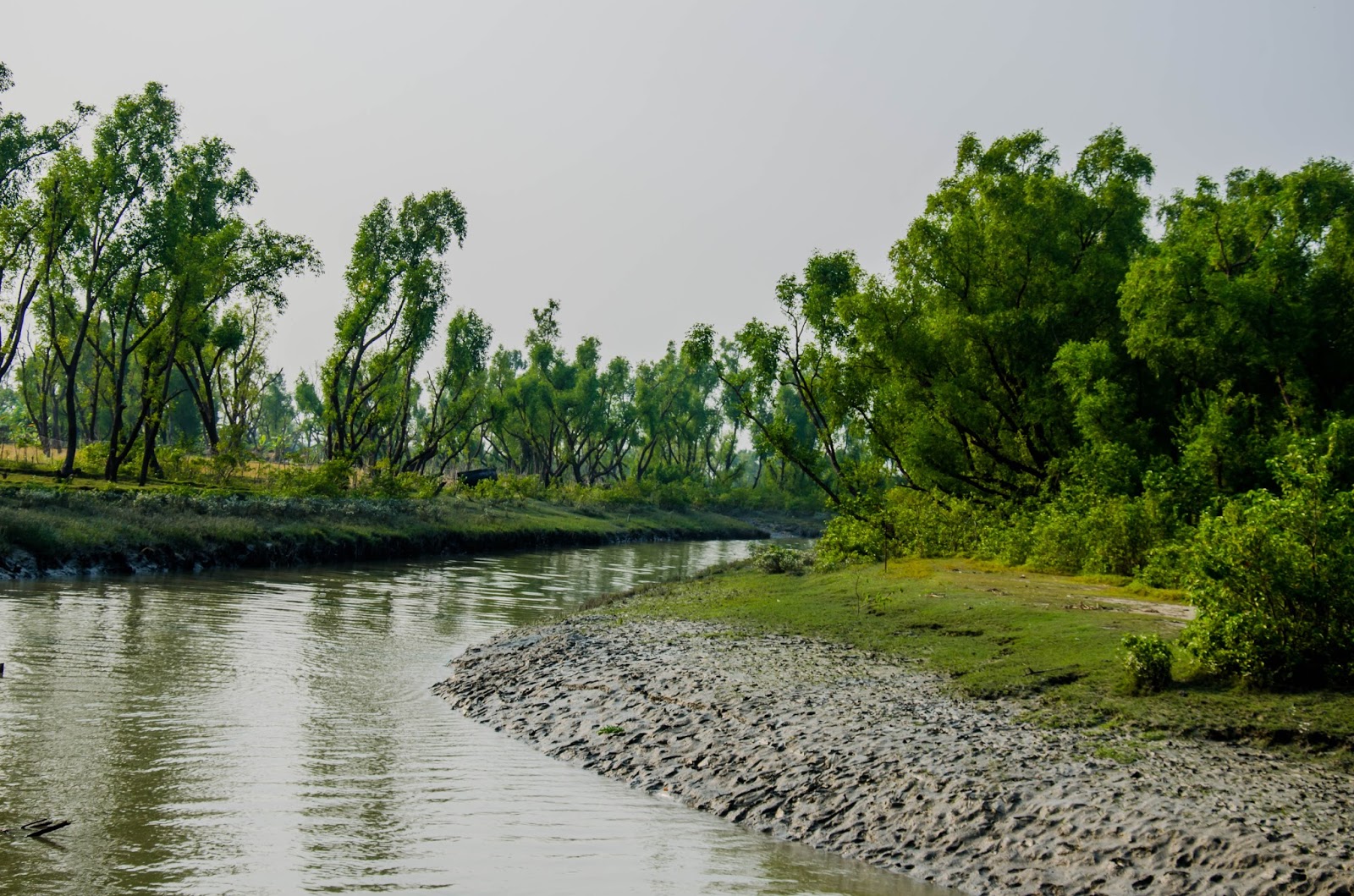
We were fortunate enough to take a short trip to Lala Khal, where we took a boat ride. We stood on the river-border between Bangladesh and India for several minutes. The low-canoes from a distance look like single lines of people supernaturally dashing through the water. Apart from that, we also witnessed elephants touring with people in the hilly areas.

The trip almost went downhill after I turned a rickshaw on its side by attempting to pull it. I just wanted to take an entertaining picture of myself on a rickshaw. However, the stunt eventually resulted in me losing control and falling into a hole. The worst part was, my friends failed to capture this episode on camera.

To sum it all up, I’d have to say the simplicity yet ingenuity of Bengali craftsmanship never ceases to amaze me. Getting to know the countryside of Bangladesh was one of the most enriching experiences I’ve ever had. If you manage to stay more than a couple of days in Srimongol, be sure to go hiking, cycling, sightseeing and taking in the goodness of the atmosphere.

Shared from ICE TODAY
Link: http://icetoday.net/2015/06/a-strangers-viewpoint/

Monday, January 23, 2017

Destination Weddings

Mehnaz Tabassum

Bangladesh, with all her natural elegance, is a magical destination to reach for weddings. When it comes to weddings, it is wise to keep space for unexpected adventure. From guest-count to flower décor, many things can go differently despite meticulous planning. So you might as well let the new chapter begin with all possible hilarious advent and take into consideration these exciting venues:


Islands


St. Martin’s Island and ‘Chera-deep’ are two islands you can keep in the short-list. From Teknaf you can cruise to St Martin's Island with the best and the safest ship Keari Sindbad and reach St Martin's comfortably in 2 or fewer hours. Keari Sindbad cruise journey is a pleasant one as you will see the spectacular views of Teknaf's hill on one side and Mayanmar on the other side while it cruises along the Naf River. Ferries leave the island around 3pm. Keari Sindbad ferry and you can purchase a round trip ticket; which can return on the same day or 1-2 days later. More than one convenient resorts are Swandeep, Hatiya, Bhola, Kutubdia and Nijhum Deep are few other islands to name.


Tropical/ Oceanfront


‘Kuakata’ is another name for sand and serenity. It is locally known as ‘Shagor Konna’ in Bengali
which is, Daughter of The Sea. A beach that offers you both the exposure of sunrise and sunset; is a rare beauty spot on earth.

Kuakata has road communication with Dhaka, but the journey may take long. It would be better to reach Barishal first by air and take a road trip from there to Kuakata. BRTC bus service follows a direct route from Dhaka to your destination, via Barishal. Also, Bangladesh Parjatan Corporation may organize guided package tours on demand.
Cox’s Bazar is widely known all over the world as the still-existing longest sea beach on earth. More popularity has made this place easier to reach. You can take a direct flight from Dhaka there. With everyone in your guest-list offered with air-tickets to Cox’s Bazar, it can be an iconic wedding party. The travel-cost might eat up lion’s share of the entire budget, but, yet again, what’s life without a bit of fun?
Inani is a stony beach near Cox’s Bazar, another gorgeous beach wedding destination.


Mountain/Lakeside Resort


For hill tracts, mountains and waterfalls, you need to look at corners of Bangladesh.

In one corner, there is Sylhet. The entire city, in local accent, Sylhot is hilly compared to the whole country. This area is near to hilly areas of India, Asam and Meghalaya. It has a high volume of natural green. Several eye-soothing places can be referred as wedding destinations. Jadipai, Naphakhum, Hum-hum are the waterfalls that have recently received the attention to venture around.

Towards another corner is Chittagong with the most hills and mountains in Bangladesh. Rangamati, Khagrachari and finally the highest form of hilly beauty, Bandarban are the areas you can reach to wed.
Nilachal and Nilgeeri attract tourists at high concentration during winter. These can be a bit ambitious destinations for weddings if you consider the security aspect. However, mountains and hills everywhere, the venue is spectacular to look at.


Architectural/Garden Party


Northbrook Hall, Ahsan Manjil and Curzon Hall are three notable architectural destinations. Though these places are open for all visitors, it might take some paper works of permissions from authority to arrange a wedding party.

There are also plenty of options for you throughout the country to arrange a garden party. Lately, a good number of luxurious and semi-luxurious resorts have been initiated in various places of Bangladesh. Grand Sultan Tea Resort and Golf, Nazimghar Tea resort in Sylhet, Sairu Hill Resorts in Bandarban are a few exclusive resorts to name for wedding.

Destination wedding, in all its glory, will differ from a classical wedding party. It will be the most adventurous and memorable way to begin a new life with your special someone and if that’s what you are looking for, then Bangladesh is the country to be in.

Sunday, January 22, 2017

Historically Sound The Vast Bengal


Reema Islam uncovers the heritage sights within Bangladesh

Photographs by Reema Islam


An ancient seal was discovered in Mahastangarh site, written in Brahmi script. The seal proved to some, that Buddhism had indeed flourished in our deltaic land Before Current Era (BCE), a fact that has given rise to much debate. Yet, Pundravardana, or Mahastangarh as we know it, was a flourishing territory by the banks of the Karatoya River. By the time Hiuen Tsang, the famous Chinese pilgrim arrived in 639-45 CE (current era), he did not mention meeting a king but wrote about 20 monasteries, 3000 monks and a vibrant atmosphere of Buddhist chants and learning. Trade routes right up to Sindh and Gujarat from present day Mahastangarh have also been mentioned in many texts. Hiuen Tsang travelled further down to Samatata or the Mainamoti ruins in Comilla and possibly passed Somapura Mahavihara or Paharpur, which is now a UNESCO World Heritage Site.

Bangladesh housed two of the five most famous universities roughly between 5th-11th century CE: Somapaura Vihara or Paharpur in Naogaon and Jaggadala, which is still to be discovered. A thriving maritime port is also thought to have been around since the 3rd century BCE, in Wari-Bateshwar, Narshingdi. An ongoing excavation has revealed the most interesting tunnels and structures built within the earth, leaving archaeologists perplexed while drawing history enthusiasts from all over!


So whether you consider the flourishing universities in Mainamati and Jaggadala to the Mughals arriving and putting Dhaka in the limelight, our history is resplendent with diversity and a unique combination of religions, cultures and ethnic origins of the people. Sri Ballal Sen setting up the Dhakeshwari temple in the 12th century CE or the Baro Bhuiyans and the Rajas of Satkhira in the 16th century CE to the oldest, constantly inhabited Hindu street, Shakhari bazaar in Old Dhaka, Bangladesh too has its unique layers of a heritage we seem to have either forgotten or simply ignore.

More ancient history comes to life as archaeologists toil to bring to light our lost ancestry. Bhitargarh in Panchagarh, Dinajpur is being excavated to reveal a 6th-7th century CE fortified city, where some village homes still have the ancient fort walls running along at parts. Situated at a junction between Assam, Koch Bihar and several other states, this area had a significant influence on the world of trade. Another site in Bochaganj, Dinajpur is also laying bare a temple from the 8th-9th century CE, which was possibly a Buddhist temple that was converted to a Hindu one. The famous Buddhist scholar Atish Dipankar hailed from Bikrampur, where these excavations are bringing us closer to this eminent personality as well as other structures from his era, giving us a wider view of how people lived back then.


A recent workshop organised by the UN World Tourism Organisation (UNWTO) and the Ministry of Tourism and Aviation called ‘Developing Sustainable Tourism based on Buddhist Heritage Culture and Pilgrimage Circuit’ has officially put Bangladesh on the map of countries with Buddhist heritage and the year 2016 is ‘Visit Bangladesh Year.’ With a heritage as rich and diverse as ours, it really is time we did something to preserve it. Our archaeology gives us a panoramic view of how different parts of Bangladesh functioned as autonomous kingdoms, forts or even ancient port cities, which together form a glorious web of ancient heritage that we seem to have done little to preserve. A visit to the museum, a family trip down to look at the archaeological ruins, visiting a village that still practices ancient rituals should be encouraged. There’s so much out there- let the journey to discovery begin. Let the Visit 2016 year also be a year where we cherish our heritage.

Shared from ICE TODAY
Link: http://icetoday.net/2015/12/historically-sound-the-vast-bengal/

Wednesday, January 18, 2017

All you need to know about travelling alone

Badruzzahan Ahmed


We came to this world alone. We will leave this world alone too. And yet somehow, we seem to be afraid of doing certain things on our own. Sure, having someone to share experiences multiplies the joy and divides the sorrow, but it is equally important to know who we truly are without feeling the necessity to be someone the world expects us to be. Our society, families and social circles rarely give us this opportunity to be alone on the path of self-discovery. Travelling solo offers us a chance to discover who we really are beyond the safety of our comfort zones and expectations.

To travel solo for the first time in a nutshell can be described as a true leap of faith. To travel solo, one must have faith that the world has more good people than bad, and that the greatest acts of kindness are sometimes from strangers that we may never meet again. But for the solo traveller, the distinction between having faith on the best of human nature and naïve whimsical acts is crystal clear. Solo travellers accept kindness with gratitude but also keep an alert mind to ensure personal safety.

An advice to first time solo travellers with possible cold feet would be this: start your first solo adventure to a destination that you feel you would be culturally and socially comfortable with. This gives the advantage of understanding the locals, place and contextual etiquettes better, and creates no stress from ‘cultural shock,’ adjustment or homesickness. Also, try to keep the duration of the first solo trip between 5-7 days. With more trips that you will make, you will gain experiences that will allow you to extend trips longer. Attempting to travel to an absolutely far-off culturally different destination might create excessive stress that will leave the wrong impression about solo travels. However, this is not necessarily true for all travellers.

The definition of the most rewarding moment of solo travels varies based on the traveller’s personality. However, one recurring reward as expressed by most travellers is discovering that we are responsible for our own happiness and satisfaction in life, and projecting the responsibility of personal happiness on another individual is sometimes unfair. Additionally, spending time with oneself allows us to contemplate our lives from a different perspective. A foreign destination sometimes reminds us how blessed we are, and alternately, how we could do better.

In the digital age of social media where we are ‘always connected,’ travelling solo and spending time with oneself continues to be vastly underrated. As the ancient Greek wisdom goes ‘Know Thyself,’ for the self can simultaneously be our greatest weakness or strength.


Shared from ICE TODAY
Link: http://icetoday.net/2016/12/all-you-need-to-know-about-travelling-alone/

Dolphins evolving in the Bay

ABIDA RAHMAN CHOWDHURY


The bay of bangle, the largest bay in the world, veiled in mystery, home to sea gods and goddesses, and full of stories of many travelers who braved the high seas to make it to the land of spices, is also one that boasts of incredible biological diversity.

*                                             *                                             *                                             *    
  
Genetic research conducted by marine scientists on the Indo-Pacific bottlenose and humpback dolphins has found animals that are distinct from their neighboring populations, according to a new study by the American Museum of Natural History (AMNH), Wildlife Conservation Society (WCS), and the Centre for Ecology, Evolution and Environmental Changes (cE3c), Universidade de Lisboa.

*                                             *                                             *                                             * 

 “Our  findings indicate that there is a connection between the presence of these distinct populations  of dolphins and the unique oceanic habitat that is found in the Bay of Bengal,” Amaral, the lead author of the study, said in an article published in the WCS Newsroom.
“The combination of a biologically rich yet isolated seascape could be driving speciation, or the emergence of new species,” the author was quoted as saying in the article.

The bay of Bengal, which is located in the northen Indian Ocean, has a unique habitat with a combination of multiple factors: it receives huge amounts of freshwater and organic matter, including sediments and minerals, from the Meghna, Brahmaputra and Ganges rivers, and leaf litter and other bio-productivity from the world’s largest mangrove forest, a unique ecosystem in its own right.

The researchers collected skin samples from 32 coastal Indo-Pacific and humpback dolphins for the study.
Genetic sequences were then extracted from the samples for comparison with previously published sequences for both species. The researchers found both dolphins to be genetically isolated from nearby populations.

The study titled “Oceanic drivers of population differentiation in Indo-Pacific bottlenose (Tursiops aduncus) and humpback (Sousa app.) dolphins of the northern Bay of Bengal” was recently published in Conservation Genetics.

[The authors of the study are Dr Ana R Amaral of cE3c, Universidade de Lisboa, Portugal and AMNH’s Sackler Institute of Comparative Genomics; Brian D Smith and Rubaiyat M Mansur of WCS; and Dr Howard C Rosenbaum of WCS and affiliated with AMNH.]


The article published by The Daily Star

Link: http://epaper.thedailystar.net/index.php?opt=view&page=17&date=2017-01-13